LA Metro, the Los Angeles rail and bus transit system, is the third most comprehensive system in the entire USA. Yet, in a metropolitan area of 13m people just 855,000 ride the bus. Why is the ridership so low? we asked ourselves and what needs to be done that Angelenos use the public transportation system in the near future?
Our research indicates that Angelenos seek for a positive bus experience, being defined by offering a reliable bus service, safety, and a stress-free environment to travel with.
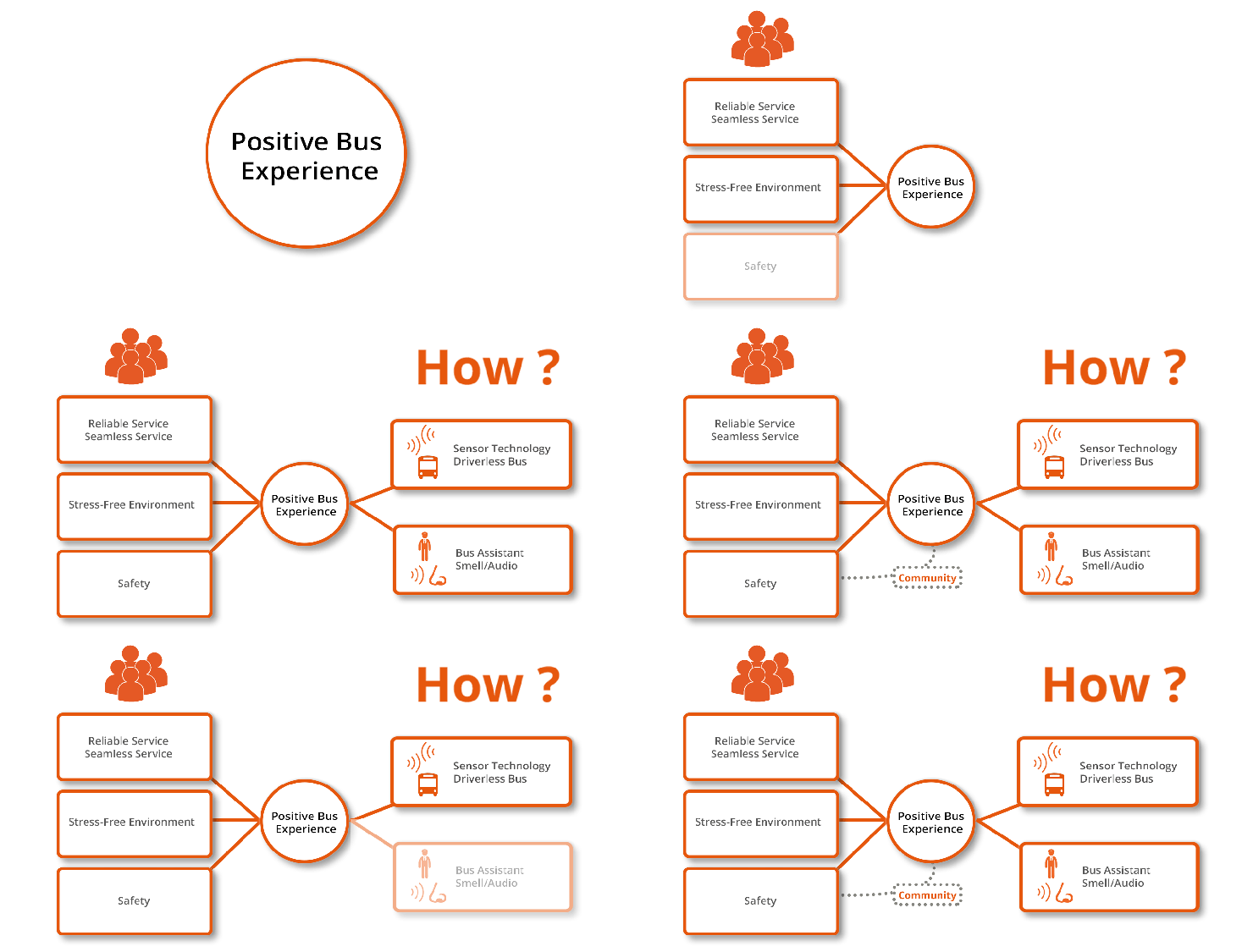 Through our research, we used the what if the concept that through a Smart Bus Network, passengers will experience a reliable, safe and stress-free environment which will allow the passenger to engage with each other.
The network uses sensor technology which can predict passengers arrival while buying the bus fare through the app. The system distinguishes 3 types of passengers being a potential passenger (buying a ticket through the app), a tentative passenger (waiting at the bus station), and the actual customer who is entering the bus. Each passenger type triggers an actions in the fog, stored a temporal virtual data storage between End-user and near-user Edge device. Driverless buses on call will respond when demand is high. The actual performed transactions and actions are collected in the cloud. Meanwhile, a passenger can experience a seamless and pleasant bus ride, experiencing the features of a bus assistant, pleasant smell, and audio.
Research
Our team started with an autoethnographic research how we perceived using public bus transportation system to clarify our own biases and empathize with passengers. Further, we observed passengers how they’re using the bus service and how they interact with other passengers. This lead that we informally interviewed passengers and non-passengers to gain understanding, why people do not interact with each other on the bus and why non-users are not using the public bus transportation system at all. Using the human-centered design we ideated our findings, creating a persona and a stakeholders map to gain insides who is invested in the public transportation system in our process.
Our quantitative research gave us insides into a sensor and driverless bus technology. We tested through a bus simulation and desktop walkthroughs how the user would respond to future bus features as sensors, bus assistant, pleasant smell, and pleasant audio. Once a positive bus experience is designed, passengers are more prepared to interact with each other, which creates a sense of community, and consequently makes them feel safe.
Prototypes
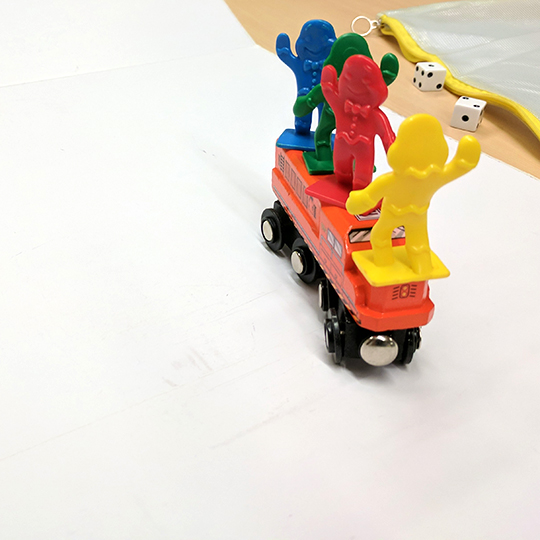
From our research and rich discussions, we wanted to know how actual passengers and non-passenger would perceive our selected features to create a positive bus experience, using payment system, driverless bus, trivia game, and smell/audio. We sketched a walkthrough game, using toys and formulated questions at certain points in the game to see how our testers perceived the bus ride. We reflected on the testers answers and our observations of the walkthrough. 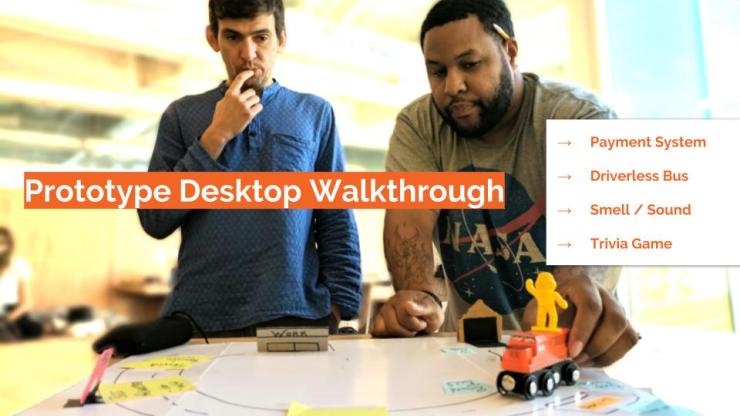
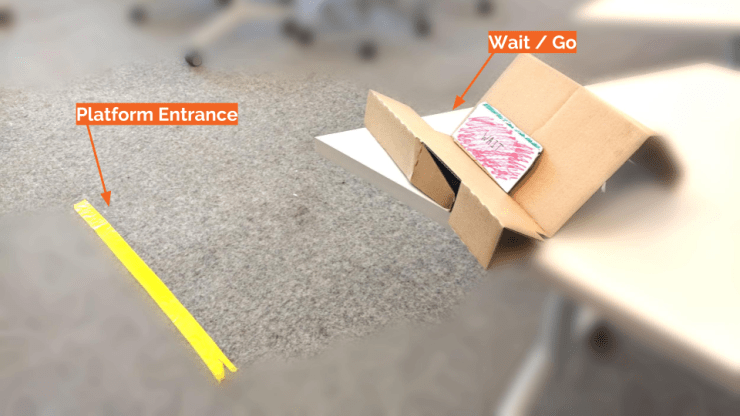
We designed a simulation to understand how testers would experience the features to create a positive bus experience.


Storytelling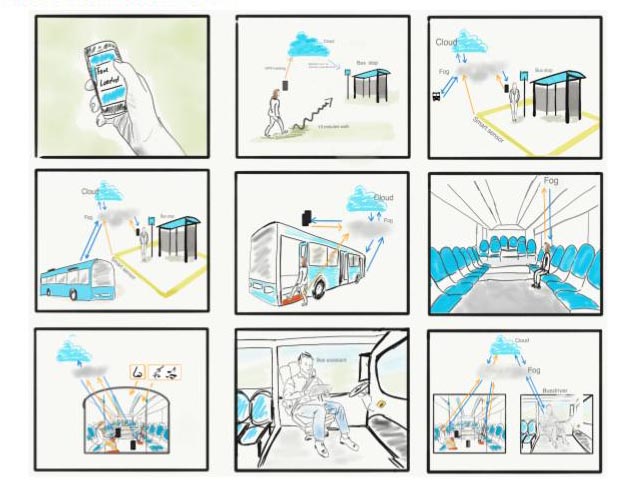
Tech & Tools
Paper, cardboard, marker, ethnographic field notes, ethnographic visuals, Adobe Photoshop, Adobe Illustrator, Adobe Draw, Pixel Smart Camera, Google Docs, Slack, and toys
Studio 3 – Santa Monica College, Selwa Sweidan – Adjunct Professor of Interaction Design
Our presentation was presented to the following guest critics
Lee Cody – Prototyper/Design technologist @ DIRECTV, Christine Meinders, AI Designer @ Artificial Knowing, Marine Terteryan – Service Designer @ The Why Lab + Good Projects, and Nicole Chan – Assistant Professor in Interaction Design
Collaborators: Kaitlin Jetviroj, Tarelle Butts

 Petra Nichols